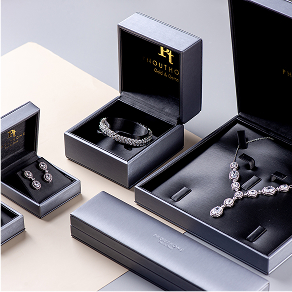
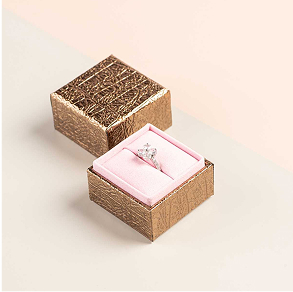
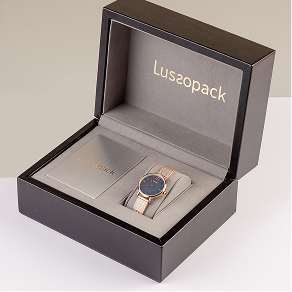
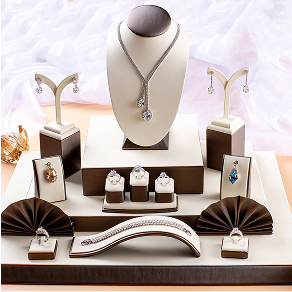
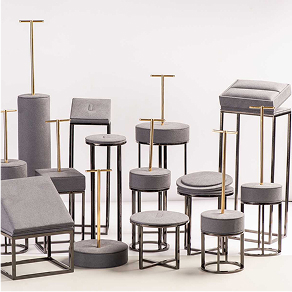
Where you source your packaging matters more than many brands realize in the early stages. The jewelry box, jewelry pouch, or jewelry case that holds a piece of jewelry or a watch is often the first physical item a customer touches. It starts shaping their perception of the product before they even see what is inside. For luxury brands, that first impression can carry real commercial weight.
But sourcing decisions go well beyond aesthetics. Lead times, minimum order quantities (MOQ), customization depth, material quality, and supplier communication all vary significantly depending on where you manufacture. Getting this decision right from the start saves brands considerable time and money as they scale.
This guide covers the countries that lead in jewelry packaging production, what to look for in a luxury packaging manufacturer, and why Thailand has become the preferred sourcing destination for international luxury brands.
Top Countries for Luxury Jewelry Packaging Manufacturing
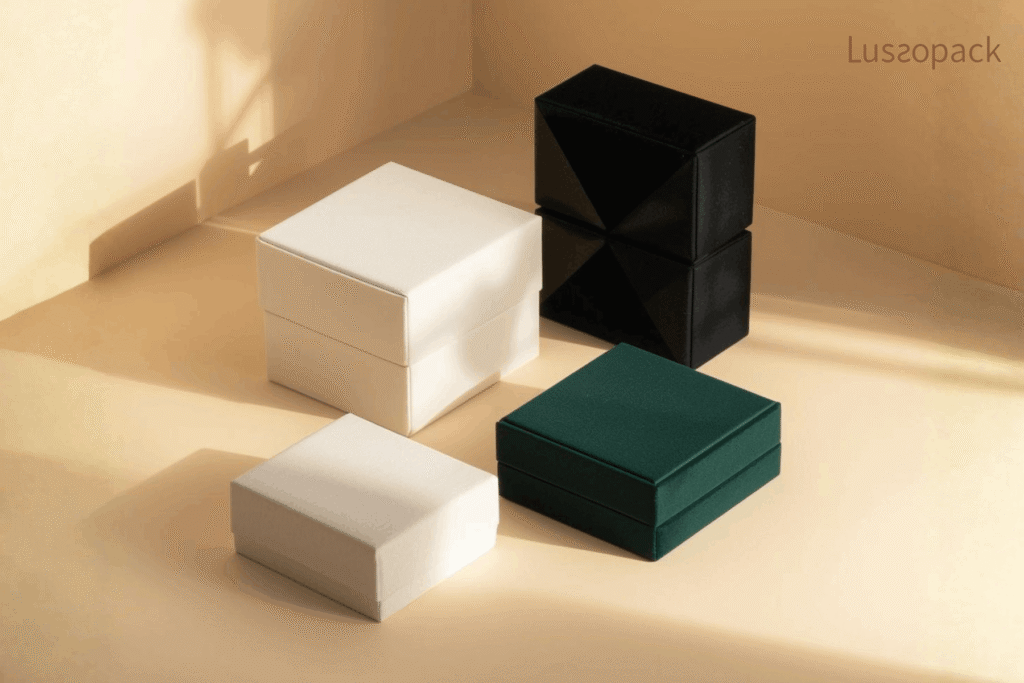
Thailand — the leading choice for custom luxury packaging
Thailand has built a strong reputation among international jewelry and watch brands for good reason. The country combines skilled handicraft traditions with a well-developed export manufacturing sector, making it particularly well-suited to custom luxury packaging.
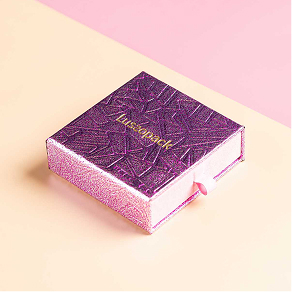
Thai manufacturers work across a wide range of materials and finishing techniques. Leatherette, velvet, satin, foil stamping, soft-touch lamination, ribbon pulls, magnetic closures, and custom foam inserts are all produced at a high standard. The workforce has genuine skill in detailed, hands-on production work, which shows in the finish quality of the final pieces.
Bangkok and Chiang Mai are both active hubs for packaging production, with strong upstream supply chains across Southeast Asia feeding into local manufacturing. This gives Thai producers reliable access to quality materials at competitive prices, without the markups that come with sourcing from further afield.
For international brands, working with Thai manufacturers is also often straightforward. English-language communication is common among exporters, and many manufacturers have experience working with clients in Australia, the UK, Europe, North America, and the Middle East. Brands from these markets report that Thai suppliers understand international quality expectations and deliver consistent results across production runs.
Minimum order quantities (MOQ) flexibility is another practical advantage. Unlike high-volume factories in larger markets that require enormous minimum orders to proceed, many Thai manufacturers can accommodate smaller initial runs for growing brands while scaling up as demand increases. This makes Thailand a sensible choice at multiple stages of a brand’s development, not just at high volume.
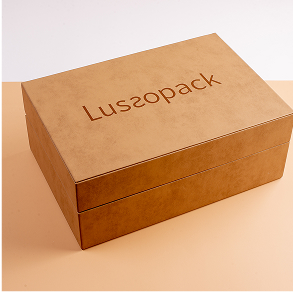
Lussopack operates from Thailand and works with jewelry and watch brands globally. The combination of craft skill, material range, and production reliability that Thai manufacturing offers forms the foundation of what Lussopack delivers to its clients.
China
China produces a large proportion of the world’s packaging, and there are genuine advantages to manufacturing at scale there. Unit costs are competitive, and factories can handle very high volumes efficiently.
The challenge for luxury brands is quality consistency. Factory quality in China varies considerably across tiers. Mass-production facilities optimized for volume often struggle with the level of detail that premium packaging requires. Customization at low-to-mid MOQs is also more limited, and lead times for complex custom work can stretch because factories prioritize high-volume runs.
China works well for brands that need large quantities of simpler, standardized packaging. For brands that require deep customization, premium materials, and close attention to finish quality, the results are less predictable.
South Korea and Taiwan
Both markets have strong technical capabilities, particularly in precision finishes and material quality. Watch brands and electronics-adjacent luxury categories have worked with South Korean and Taiwanese suppliers to good effect.
Costs are higher than Southeast Asian alternatives, and these markets tend to suit minimalist or technically refined packaging rather than the warmer, more textural finishes common in jewelry packaging. Communication and international shipping logistics are generally reliable.
India
India has genuine strengths in fabric-based packaging. Velvet pouches, embroidered boxes, and artisan-style presentation cases are areas where Indian manufacturers have a long tradition. For brands whose visual identity leans toward a handmade or craft aesthetic, Indian suppliers can produce distinctive pieces.
Quality control is inconsistent across the sector, which means brands need to spend more time vetting individual suppliers and managing sampling closely. Production capacity for export-oriented custom work is growing, but it is not yet as organized as other regions.
Italy
Italian packaging carries an obvious brand story. For some luxury labels, “Made in Italy” on packaging materials is itself a marketing asset, and Italian manufacturers generally operate to very high standards.
The trade-offs are cost and lead time. Italian production is expensive, and turnaround times tend to be longer. Scaling up production quickly is rarely straightforward. Italy makes most sense for established brands with healthy margins that want European provenance as part of their packaging narrative.
What to Look For In a Jewelry Packaging Manufacturer
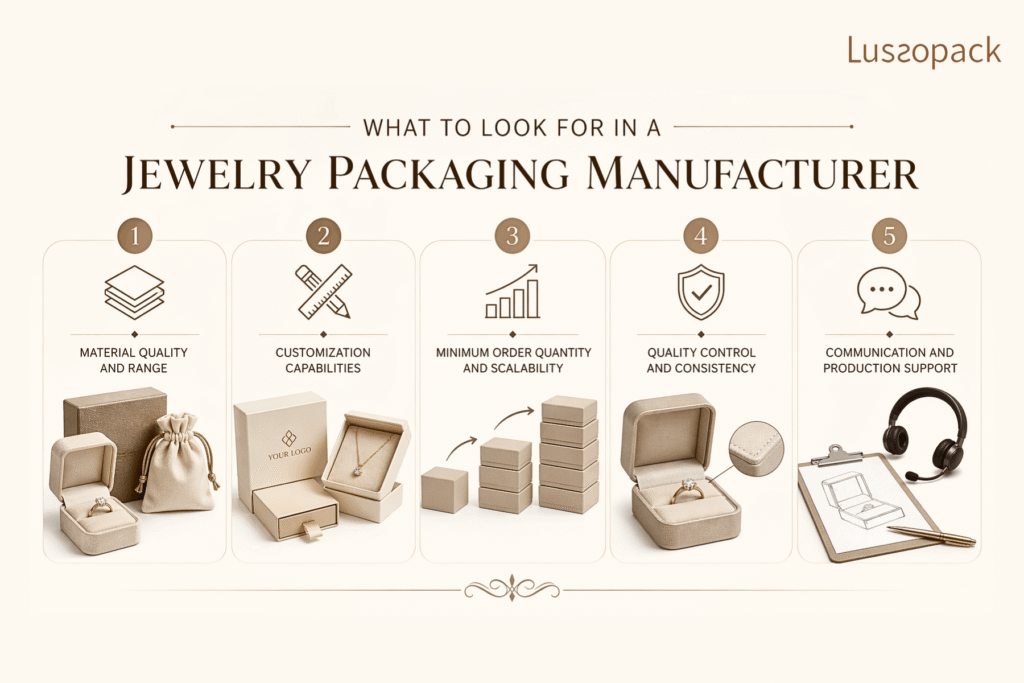
Once you know which region makes sense for your brand, evaluating individual manufacturers requires a consistent framework. These are the factors that matter most.
Material quality and range
The materials a manufacturer works with determine what is actually possible in terms of finish, durability, and perceived quality. Ask whether they source premium chipboard grades, quality leatherette, and properly dyed fabric linings, or whether they are working with cheaper alternatives that may look acceptable in samples but deteriorate over time.
Many of the most common packaging mistakes that make jewelry look cheap come down to material choices made at the sourcing stage rather than design decisions. A box that feels light when lifted, a lining that pills after a few uses, or an exterior that scuffs easily are all material problems, not aesthetic ones. They are also preventable when the manufacturer is working with the right grade of components from the start. A manufacturer with a broad material range gives brands more creative freedom and allows packaging to evolve without switching suppliers.
Customization capabilities
Surface customization options should include at a minimum: hot foil stamping, embossing, debossing, UV printing, and matte or gloss lamination. Structural customization includes die-cutting, drawer mechanisms, magnetic closures, and custom insert profiles.
Ask whether the manufacturer can produce structural prototypes before committing to a production run. A supplier that offers prototyping shows they take quality seriously and understand that custom packaging requires a testing stage.
MOQ and scalability
Minimum order quantities should match your stage of growth. A startup launching its first collection has different needs from an established retailer ordering seasonal packaging at scale. The right manufacturer can serve both, and should be transparent about MOQ requirements before the conversation gets too far.
Also consider whether the supplier can scale efficiently. Switching manufacturers mid-growth is costly and risky, so finding one that can grow with you from the start is worth the extra scrutiny upfront.
Quality control and consistency
Ask about the sampling and approval process. How many rounds of sampling does the manufacturer allow? What tolerances do they apply to color matching and structural dimensions? What happens if a production batch arrives with defects?
Reputable manufacturers have clear answers to all of these questions. If a supplier is vague about their quality process, treat that as a warning sign.
Communication and production support
International packaging orders require clear, timely communication. Language barriers, slow response times, or a lack of transparency during production can cause delays that affect product launches and retail restocking.
Some manufacturers also offer design support, which is useful for brands that do not have in-house packaging designers. Others require fully production-ready files. Knowing this upfront prevents frustration.
Why Thailand is the Gold Standard for Luxury Brands
There is a reason Thailand keeps coming up in conversations about quality packaging sourcing, and it goes beyond cost.
Thai manufacturers bring something that is genuinely hard to find elsewhere: craft culture, strong material access, and production flexibility all in one place. Most sourcing decisions force a trade-off between at least two of those three. Thailand tends not to.
1. The craft runs deep
Skilled workers in Thai factories typically have backgrounds in detailed handwork across textiles, jewelry, and furniture production. That precision carries directly into packaging. The attention given to a fabric lining, the evenness of an emboss, the way a box closes cleanly — these reflect something built into the workforce rather than enforced through a checklist. You notice it in the samples before you even place an order.
2. Material access is a real advantage
Thai manufacturers sit within a well-developed Southeast Asian supply chain. Specialty papers, leatherettes, velvet and suede linings, foil materials, magnetic hardware, ribbon pulls, and rigid board are all sourced regionally, which keeps lead times reasonable and the material palette wider than you would get from a manufacturer in a higher-cost country at a comparable price point.
3. The business environment suits international clients
English communication is standard among experienced Thai manufacturers. The processes — sampling, approval workflows, production planning, shipping logistics — are calibrated for overseas clients rather than adapted awkwardly from a domestic model. Brands from Australia, the UK, the US, Europe, and the Middle East have been sourcing from Thailand for years, and the infrastructure reflects that.
4. Flexibility that actually works in practice
Most luxury jewelry and watch brands do not need 10,000 units of a single packaging format. They need a range of formats across a collection, often with short-run quantities on some SKUs and larger volumes on others. Thai manufacturers handle that mix well. The MOQ flexibility for initial runs, combined with the ability to scale when volume grows, makes Thailand practical at multiple stages of a brand’s growth.
For brands that want genuine customization, craft-level finish quality, and a manufacturer that engages with the brief rather than just processing it, Thailand is the clearest choice on the sourcing map.
How to Evaluate a Thai Jewelry Packaging Manufacturer
Not all Thai manufacturers operate at the same level. When you are assessing a potential partner, these are the areas that separate professional operations from those that look good in a catalog but struggle in execution.
1. Sample quality relative to the brief
Request samples that match what you are actually trying to build. If you need a magnetic closure rigid box with foil stamping and a velvet insert, ask for that specifically, not a generic show sample. How closely the sample matches the brief tells you more than any specification sheet.
2. Clarity on materials
Ask what grade of board is used in the box construction, where the exterior material comes from, and what the interior lining specification is. A manufacturer confident in their quality will answer this without hesitation.
3. Production timeline transparency
Ask what the realistic timeline is from sample approval to shipment, including current factory capacity. A manufacturer who gives you an optimistic number without checking their production schedule is not giving you a real answer.
4. Reorder reliability
Ask how reorders are handled and what the tolerance is for color and finish consistency across runs. Packaging that shifts slightly between orders creates a branding problem that compounds over time.
5. Communication in practice
Before committing, run a few back-and-forth exchanges and note how quickly and clearly they respond. The communication quality during the inquiry stage is usually a fair indicator of what you will get during production.
Partner with Lussopack for Custom Jewelry Packaging
If you are sourcing packaging for a jewelry or watch brand and want a manufacturer that takes the details seriously, Lussopack is ready to discuss your requirements.
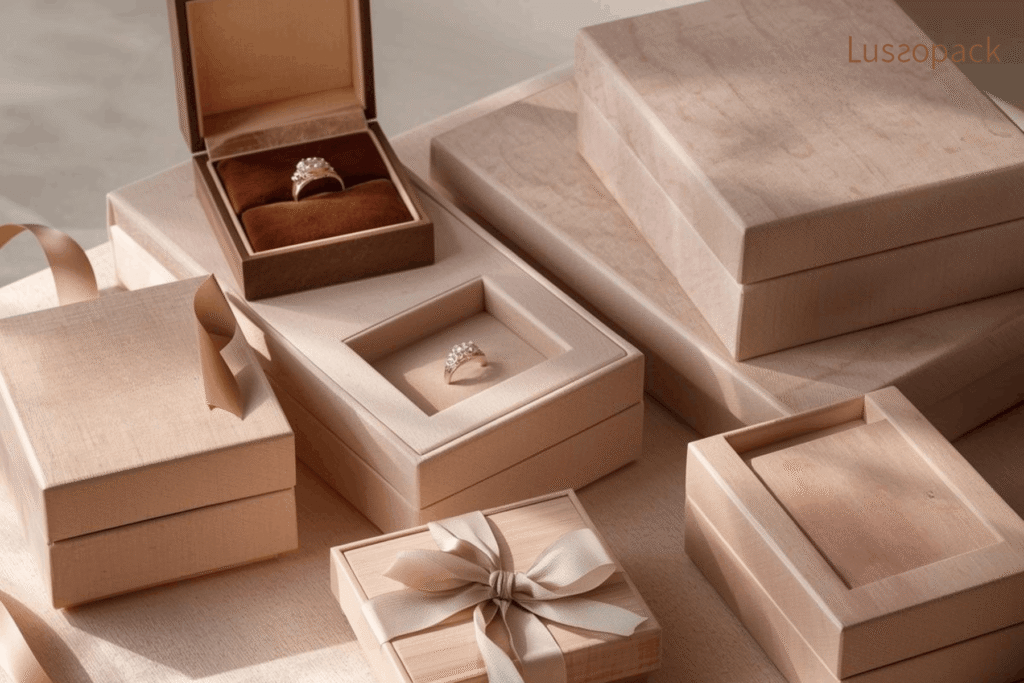
Our team at Lussopack can support your brand through every stage of the packaging process: initial concept, material selection, structural design, surface finish options, prototyping, and full production. Whether you are launching a new collection, refreshing existing packaging, or scaling an established line, the goal is packaging that represents your brand well and holds up through repeated use.
When you are ready to move forward, it helps to come prepared with your specifications or design files for custom packaging production so the team can give you the most accurate guidance from the first conversation. Bring your brief, your questions, or just an idea of what you need, and the Lussopack team will take it from there. Get in touch to start a conversation about your packaging project.