The best watch travel case protects a timepiece in transit while giving its owner a branded object worth using long after purchase. For watch brands, that continued use can reinforce perceived value beyond the initial unboxing. This guide explores design principles, materials and formats, then explains how to develop a custom case that fits your watches and commercial goals.
What Heritage Houses Teach Us About Watch Travel Case Design
Luxury houses offer useful design references, from recognizable surfaces to practical interiors. The lessons below are interpretations for packaging development, rather than a ranked shopping list. These references do not imply any affiliation with Lussopack.
Louis Vuitton Watch Travel Case Design and Recognizable Materials
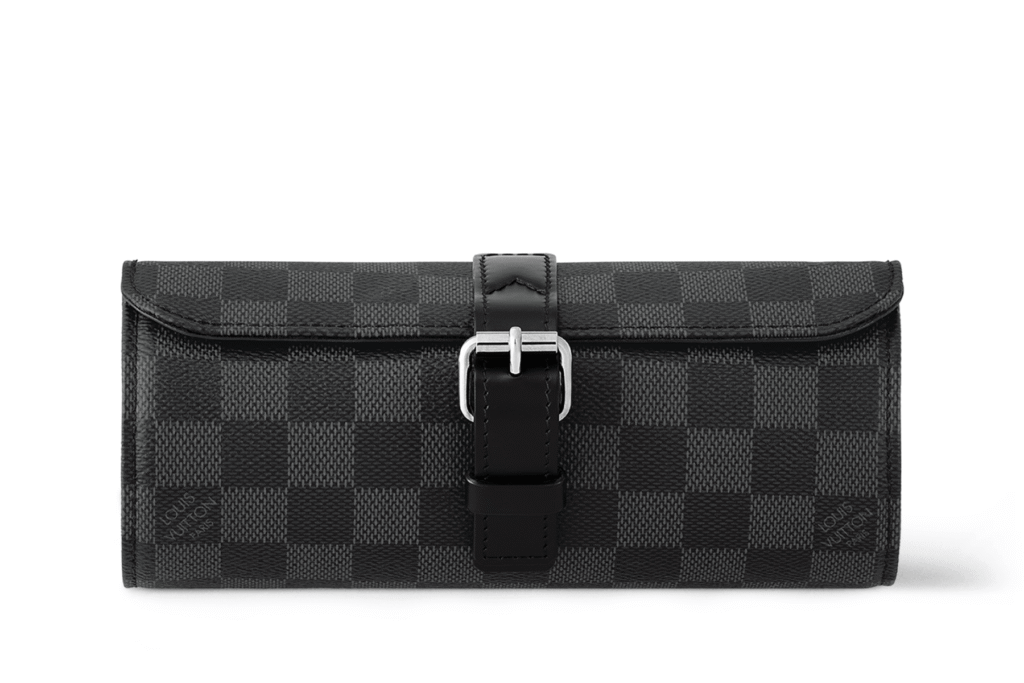
Louis Vuitton’s three-watch case combines Damier Graphite canvas, leather trim and a soft microfiber lining in a compact travel format. Its exterior connects the accessory to the house’s broader travel identity, while the interior serves a specific purpose. Recognition comes from a coherent combination of pattern, proportion and finishing.
Your brand can apply this principle by carrying one distinctive material or color from its retail packaging into a reusable travel case.
Patek Travel Case Design and Focused Single-Watch Storage
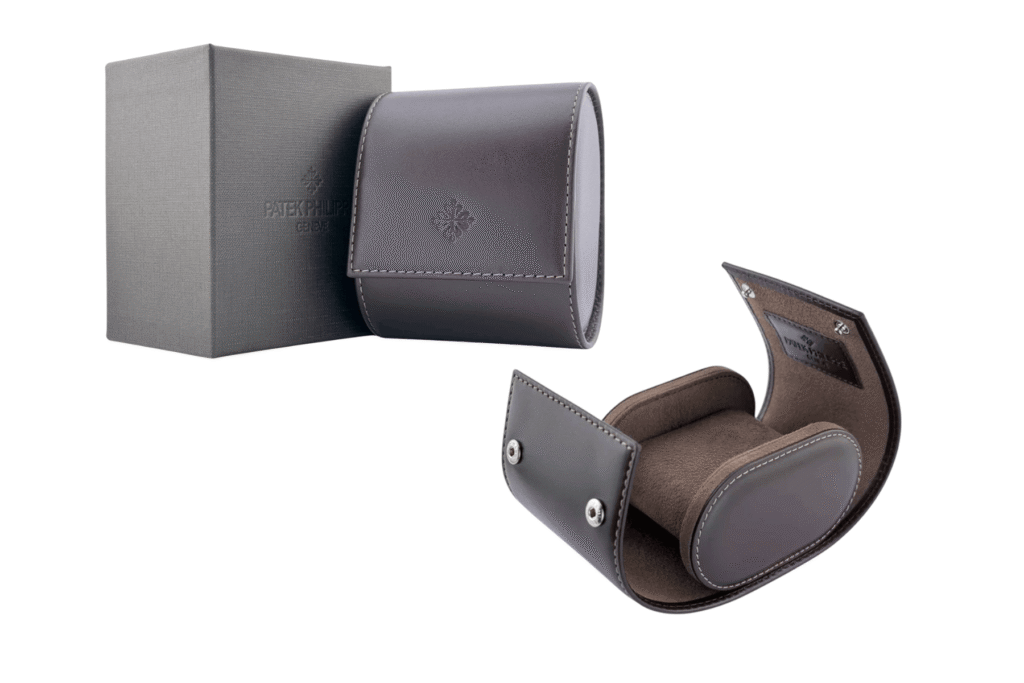
The matte brown Patek Philippe watch case listed by Naused Luxurious combines a leather exterior with compact proportions measuring 9.5 × 8 × 6.5 cm. Its muted color and matte finish offer a useful design lesson: a travel accessory can convey luxury through material, proportion and restraint, without elaborate decoration.
Your brand can apply this principle by choosing a distinctive neutral tone and carefully finished leather that complement its watch collection and existing packaging.
Cartier Travel Watch Case Design and Refined Material Contrast
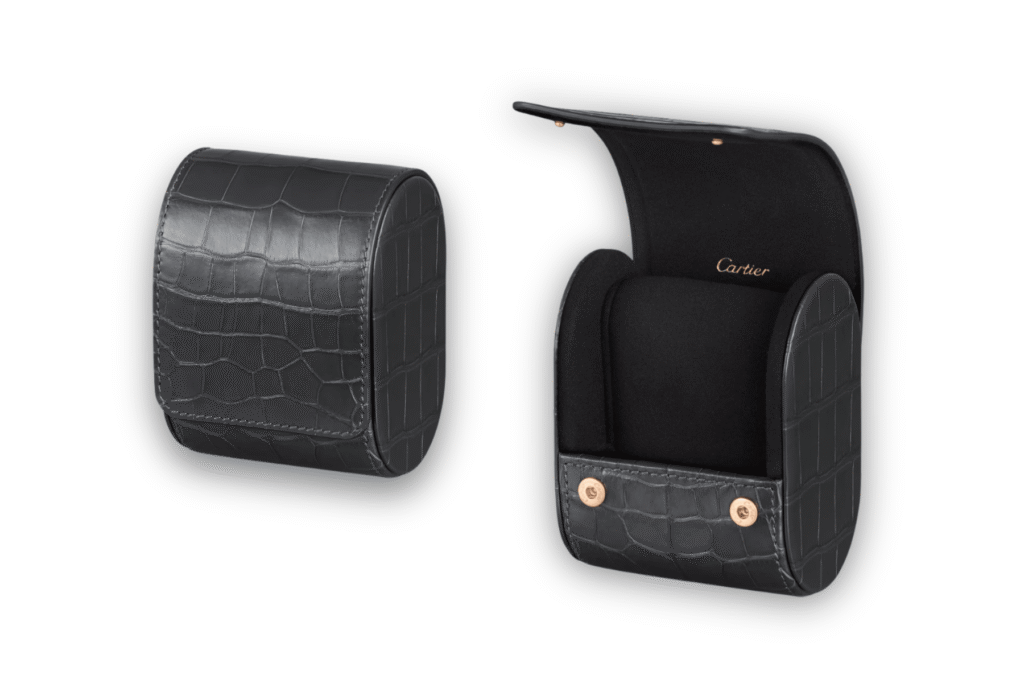
Cartier’s Masse Mystérieuse watch travel case pairs black alligator leather with a black interior and a pink finish. The textured exterior and contrasting finish offer a useful lesson in creating visual interest through a restrained material palette. For a brand developing its own case, the design principle is to make a few carefully chosen details carry the sense of luxury.
Your brand can apply this principle by pairing a distinctive exterior texture with a controlled accent color that reflects its own identity.
Hermès Watch Travel Case Design and Material Contrast
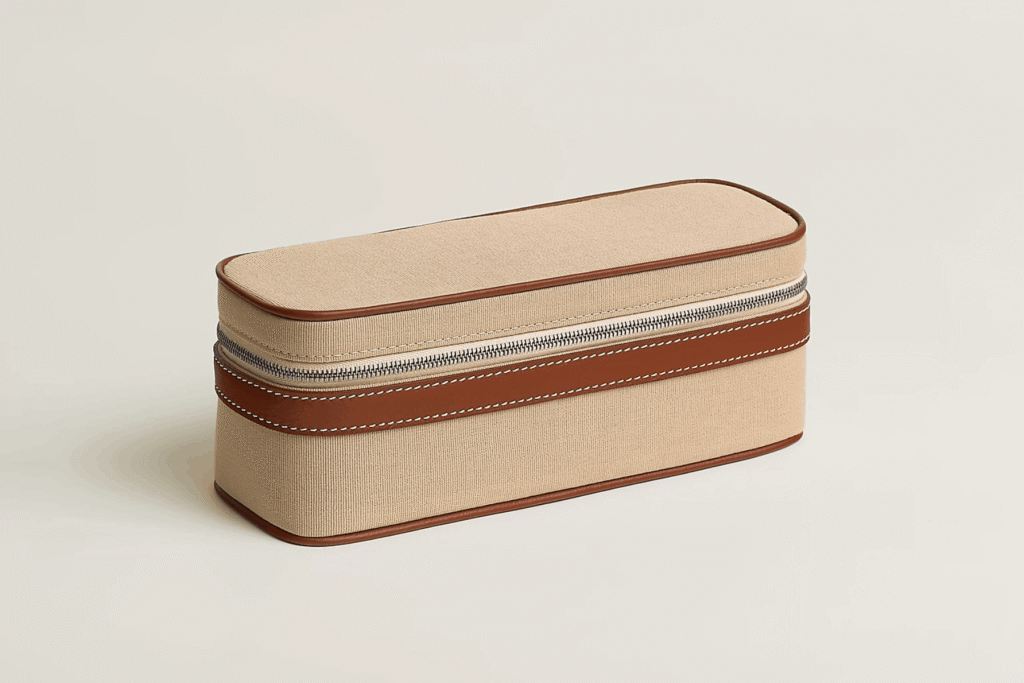
The Hermès H Clock case brings together Officier canvas, smooth taurillon leather and velvet lambskin. The combination provides a useful reference for balancing an exterior textile with tactile leather details. The design lesson is a deliberate material hierarchy, with each surface contributing to the object’s character.
Your brand can apply this principle by assigning clear roles to the exterior, trim and lining instead of adding finishes without a purpose.
Smythson Watch Rolls and a Consistent Accessory Family
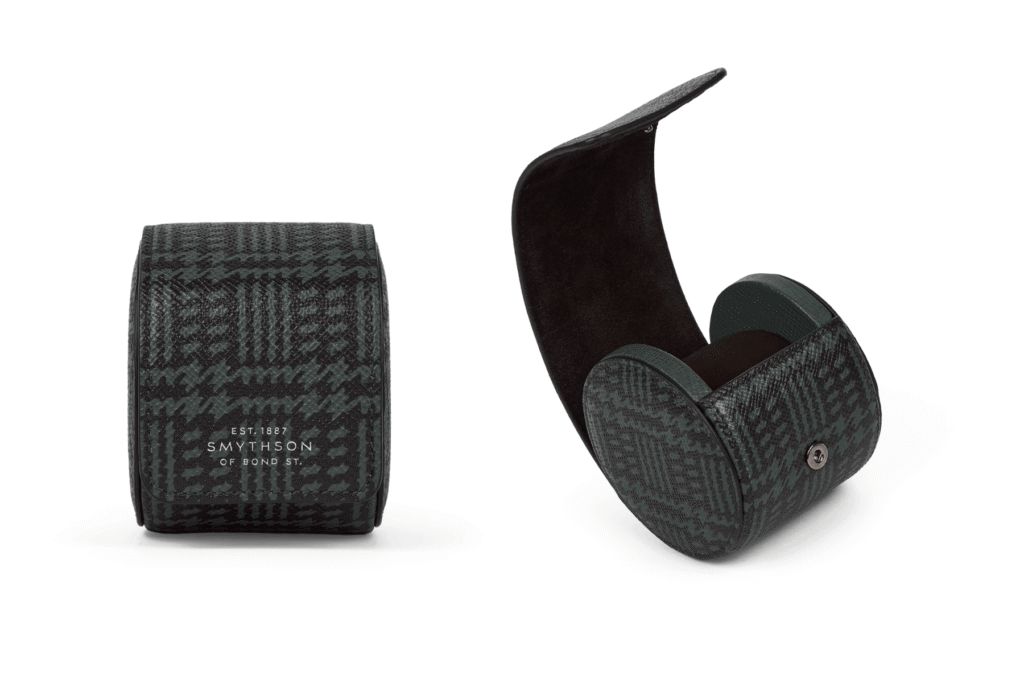
Smythson’s watch-roll collection includes single-watch and larger formats in its Panama leather range. The shared material language allows different capacities to feel connected. This is particularly relevant when a brand needs an entry-level gift and a higher-value collector accessory within one collection.
Your brand can apply this principle by establishing a common color, leather grain and logo treatment across several case sizes.
RIMOWA Watch Cases and Recognizable Structure
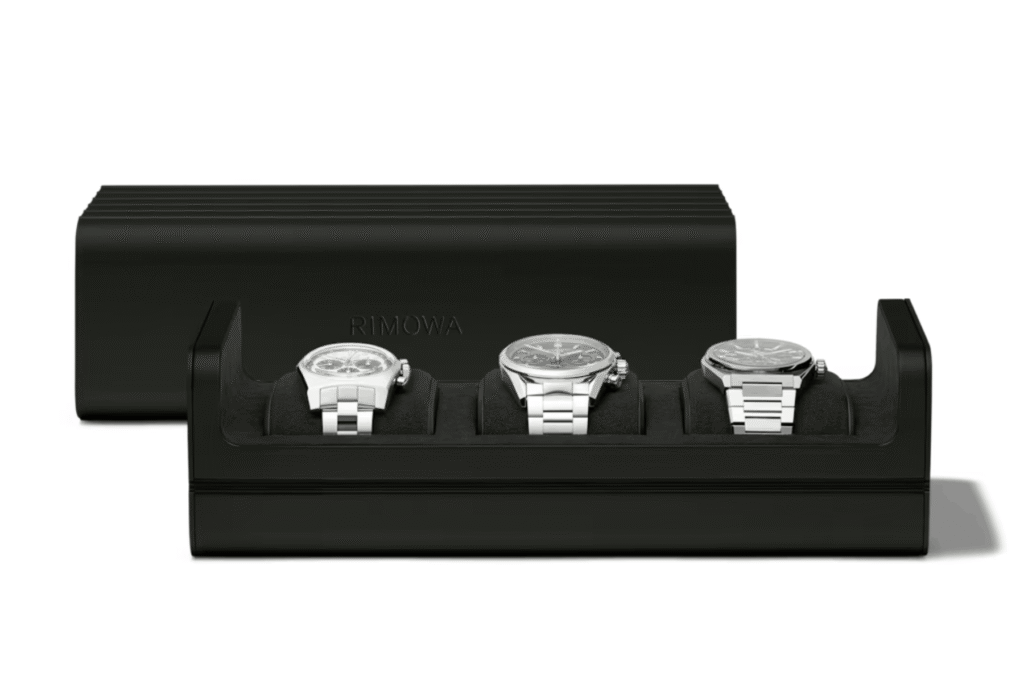
RIMOWA’s aluminum watch case translates its grooved luggage exterior into a cylindrical case with removable padded cushions and a microfiber interior. It demonstrates that a recognizable structure can communicate identity as effectively as a printed logo. Interior retention also remains central to the product’s functionality.
Your brand can apply this principle by translating an existing design detail into the case’s shape or hardware while validating the fit inside.
What Makes the Best Watch Travel Case?
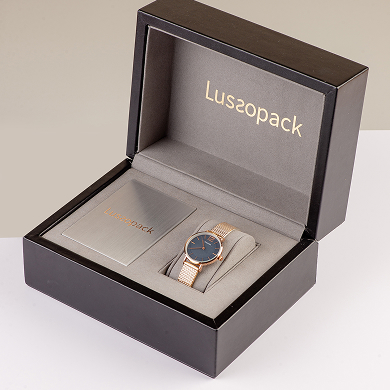
The best watch travel case combines a supportive structure, a well-fitted interior and a closure owners can use confidently. The best luxury watch cases also remain practical after the first presentation, with details that withstand repeated handling.
Structural Protection
A case needs enough rigidity to limit compression under its intended travel conditions. Check the walls, base and lid together: an attractive outer shell cannot compensate for unsupported gaps. A soft pouch offers limited crush protection, so define the intended use before choosing the construction.
Interior Lining and Cushions
Specify a soft lining, smooth seams and hardware kept away from polished surfaces. Cushion dimensions should accommodate the bracelet’s closed circumference without stretching it. Test small and large wrist sizes, and allow clearance above the crystal, bezel and crown. Softness alone does not guarantee a secure fit.
Closures
Zippers, snaps, buckles and magnetic closures each create a different opening experience. Check that the closure stays shut during handling and does not scrape the watch. Review repeated opening cycles, attachment strength and ease of use on a physical sample.
Portability
Measure the finished case with watches inside. Weight, external dimensions and access matter as much as capacity. A compact case that fits a carry-on bag is more likely to become part of an owner’s routine.
Luxury Watch Travel Case Materials
A luxury watch travel case needs materials that suit its structure, intended lifespan and price point. For a broader view of material choices and reuse, explore our guide to luxury packaging trends. Compare complete constructions rather than judging quality from the outer covering alone.
Rigid Board with Fabric or Paper Wrap
Rigid board supports precise shapes and coordinated fabric or specialty-paper coverings. It can work well for presentation-led gifting and occasional transport when properly engineered. Exposed edges, moisture and repeated handling need consideration, especially around hinges and closures. A wrapped board box should not be assumed to perform like a purpose-built hard travel case. Choose the structure against the expected use and validate it through sampling.
Leather and Leather Alternatives
Leather can provide a tactile surface for stitched pouches and structured rolls. Specify the grade, thickness, finish and color consistency, then review how edges and folds behave. Leather alternatives can offer different textures and budgets, but performance varies by substrate and coating. Request samples and evaluate abrasion, flexing and surface deterioration for the intended conditions. Avoid assuming that an alternative is more sustainable without supporting evidence.
Wood
Wood and wood-based structures can create substantial, protective cases with a strong presentation presence. Their weight and bulk may suit collectors or short transfers better than frequent air travel. Check hinge alignment, corner durability, interior padding and finish consistency. For international projects, confirm any material-specific import requirements before finalizing the specification.
Single Watch vs Multi-Watch Travel Cases
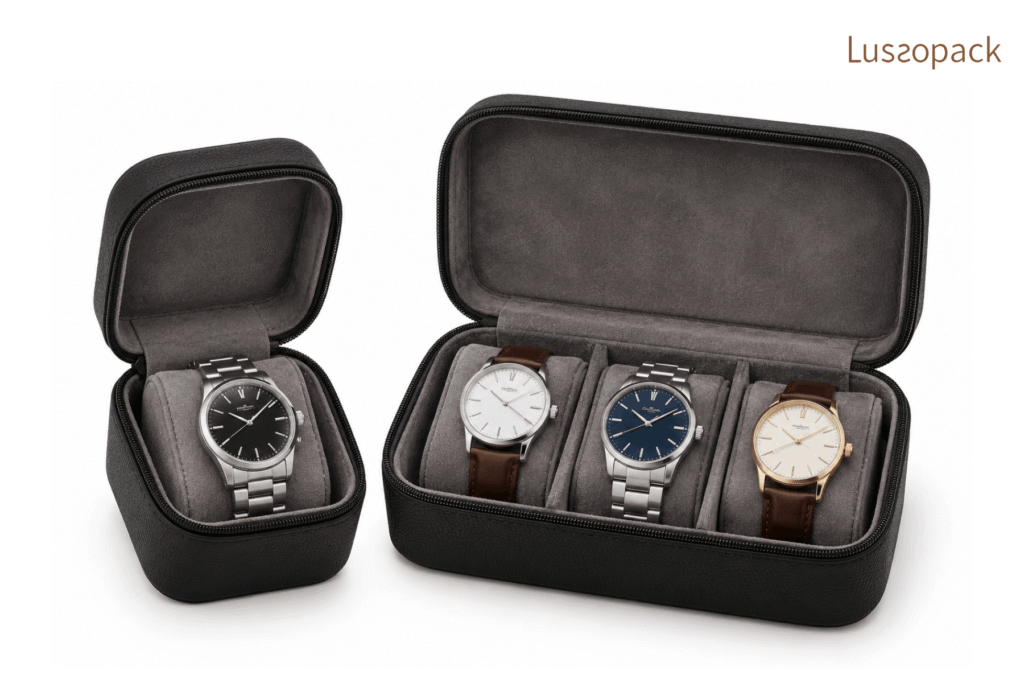
Capacity should follow the owner’s routine. Someone carrying one spare watch needs a different solution from a collector taking several pieces to an event. The best travel case for watches balances usable space with separation and secure retention.
The Best Single Watch Travel Case Formats
The best single watch travel case depends on the watch and how it will be carried. A flat pouch takes little space but offers limited compression resistance. A structured clamshell adds an enclosing shell, while a compact single-watch roll can keep a bracelet curved around a removable cushion. Check whether the owner must remove the entire holder to access the watch and whether the case stays stable when open.
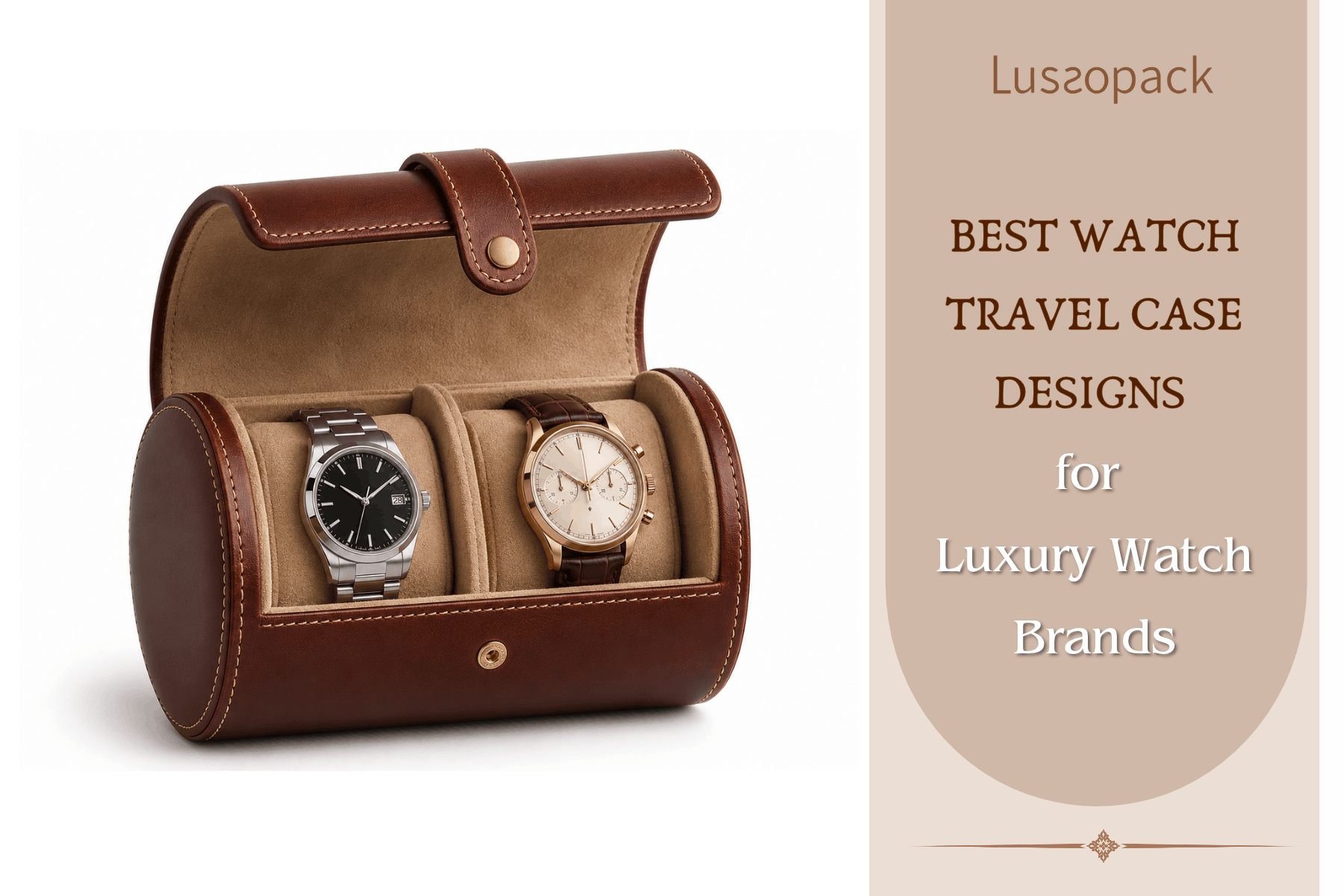
Multi-Watch Travel Cases and Watch Rolls
Multi-watch formats need adequate spacing between timepieces and a way to prevent lateral movement. Separate compartments can help keep crowns, clasps and bracelets apart. For shared-cylinder rolls, examine how watches are separated and retained when the case is partly empty. Removable individual cushions make it easier to access one watch without disturbing the others.
| Format | Typical use | Main consideration |
|---|---|---|
| Flat single pouch | Everyday storage or light transport | Limited crush protection |
| Structured single case | One spare watch in a travel bag | Cushion and shell fit |
| Multi-watch roll | Several watches in a compact format | Separation and retention |
| Compartment case | Collector travel or presentation | Added size and weight |
Test each proposed format with representative watches, including smaller bracelets and thicker cases, before committing to tooling or production.
Choosing a Travel Case for a Rolex or Other Sport Watch
Sport watches can combine substantial case thickness, projecting crowns and relatively heavy metal bracelets. Start with the exact models, including diameter, thickness, lug-to-lug measurement and closed bracelet circumference. Diameter alone cannot establish compatibility.
Finding the Best Rolex Travel Case Through Fit
Choose a cushion that supports the bracelet without forcing the clasp shut or allowing the watch to rotate freely. Leave clearance around the crown, bezel and crystal, and check that the clasp cannot rub against the case back during movement. Larger dive watches may require a deeper shell than slimmer everyday models.
Ask the supplier to evaluate both the smallest and largest bracelet sizes you expect customers to use. Check loading, closure and movement with the case in different orientations. A brand name on the exterior is not proof of suitability for every model. For a custom project, use a representative watch or an accurate dimensional model during prototype review.
How Watch Brands Use Travel Cases Commercially
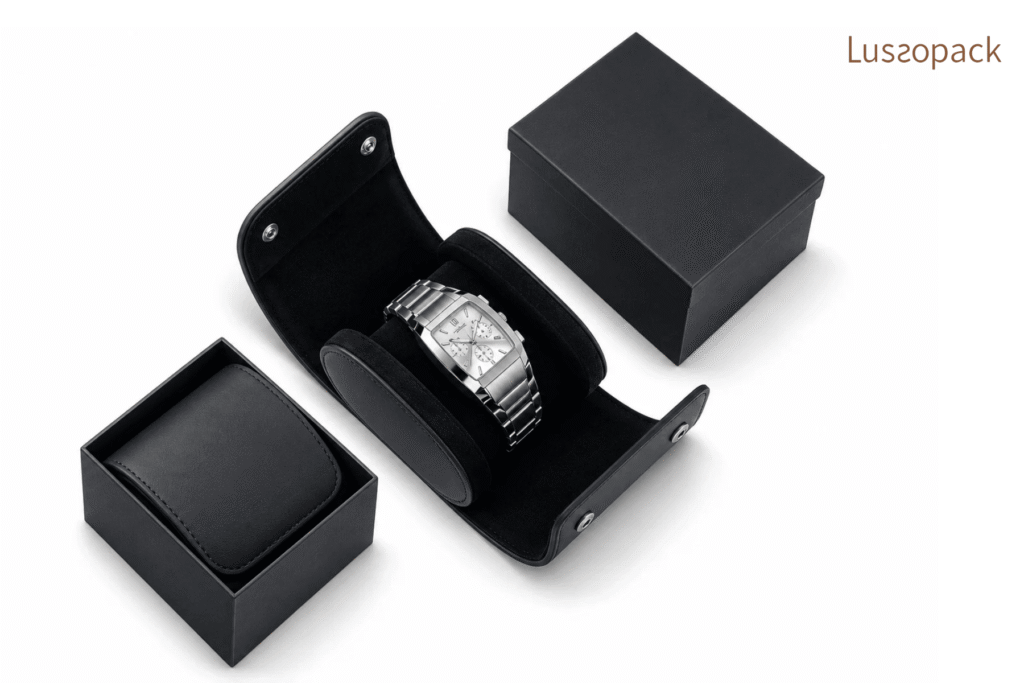
A useful travel accessory gives a brand another opportunity to remain visible after the watch leaves the boutique. Define its commercial role early, because that decision affects materials, cost and presentation. Brands selling across boutiques and e-commerce can also draw on our guide to jewelry packaging for retail and online brands when coordinating presentations across channels.
Gift with purchase: A compact case can add practical value to a purchase. Choose a construction customers can comfortably carry, rather than allocating the budget entirely to decorative finishing.
VIP clienteling: A personalized accessory can support collector relationships, with initials, carefully selected colors or a discreet interior message.
Retail upsell: A separately sold case needs a clear reason to buy, such as additional capacity, stronger structure or a more refined finish. The design should justify its place alongside existing accessories.
Limited editions: Coordinated colors, interior details or edition markings can connect the case to a specific watch release.
Once the purpose and target quantity are clear, the brief can move from an attractive concept to a custom product with a defined budget and delivery plan.
How to Design a Custom Watch Travel Case for Your Brand
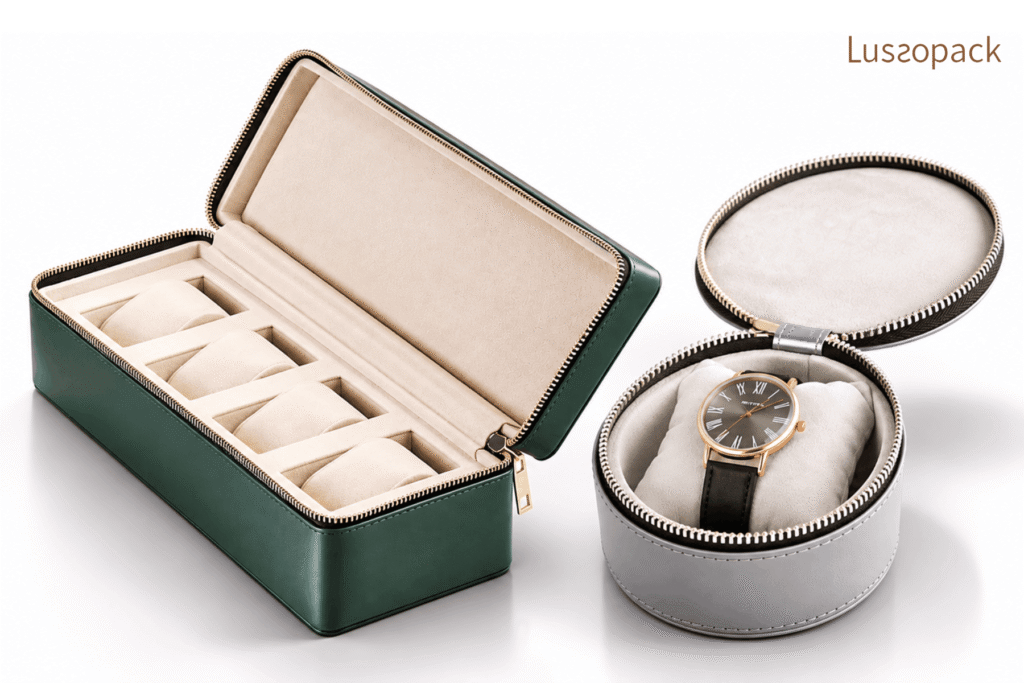
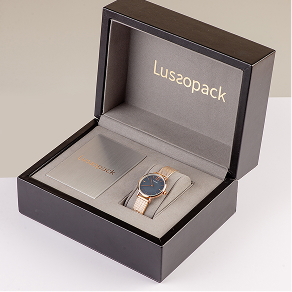
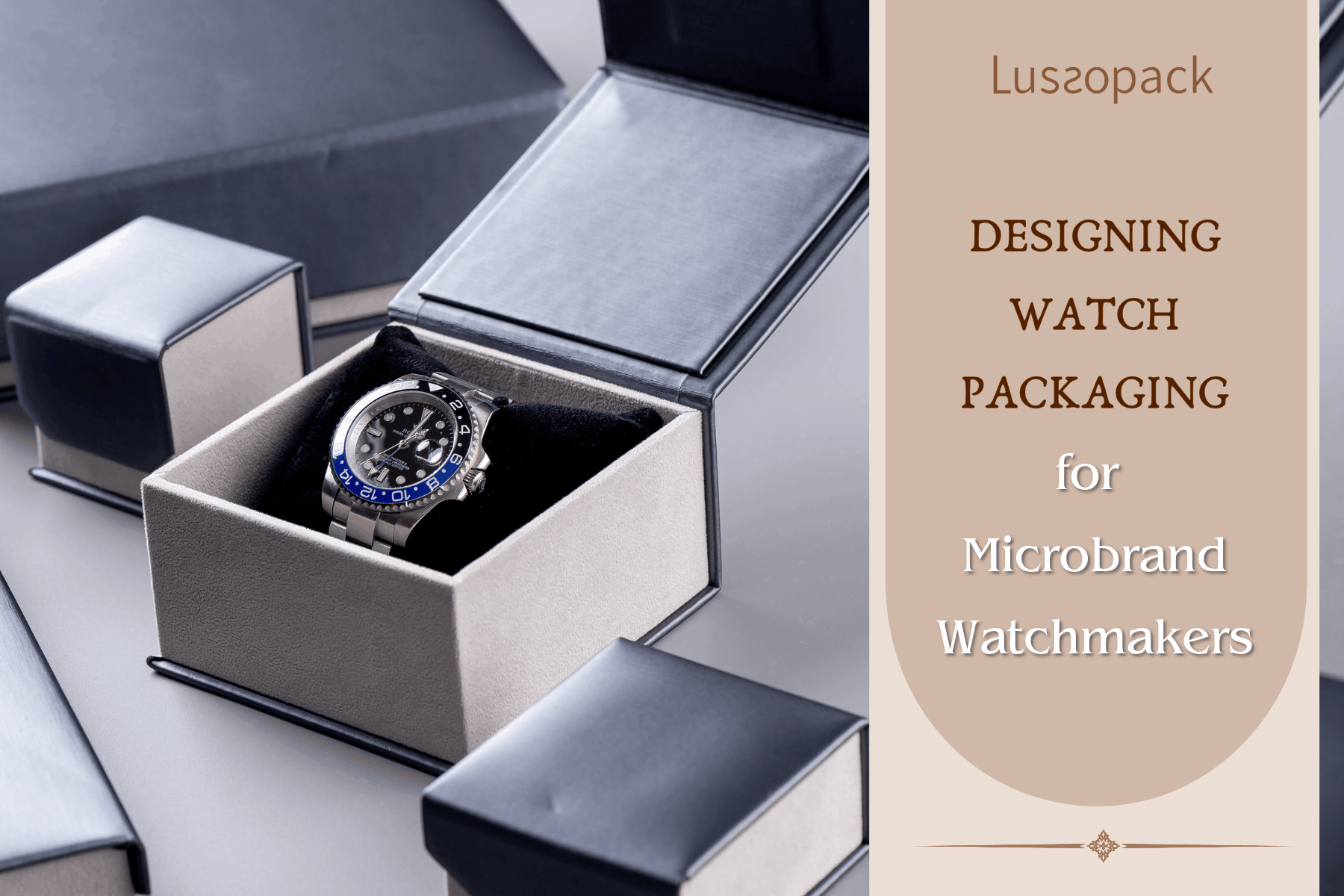
Begin with the watch, the customer and the intended use. Lussopack’s custom watch packaging can be developed around your brand identity, with material and structural choices reviewed during design and sampling. Our guide to designing watch packaging for microbrand watchmakers provides further context for planning a consistent packaging system.
1. Define the brief. Share watch dimensions, bracelet sizes, capacity, travel conditions and target unit cost. Include the order quantity, launch date, destination markets, logo files and brand guidelines. Identify any retail boxes the case should complement.
2. Review the 3D rendering. Use a rendering to assess proportions, color combinations, logo placement and the opening sequence before a physical sample is made. Confirm which details are illustrative and which dimensions form part of the production specification. A rendering helps communicate the concept; physical fit still needs testing.
3. Approve the prototype. Review the actual materials, cushion compression, lining seams and closure operation. Test representative watches for clearance and movement. Record any revisions and approve a final reference sample before bulk production.
4. Move into production. Agree on the material specification, finish tolerances, inspection criteria and packing method. Lussopack manufactures luxury packaging in Thailand, combining material preparation, assembly and finishing with quality checks. Confirm the project schedule before placing the order.
5. Plan warehousing and delivery. Determine whether the cases will ship in bulk, be stored for later release or be distributed in agreed batches. Lussopack offers packaging warehousing and distribution; confirm destinations, release quantities and any individual-order requirements during quotation. For a related sourcing perspective, read our guide to wholesale watch boxes for Swiss retailers.
Start your custom watch travel case project with your preferred format, watch dimensions and estimated quantity.
Frequently Asked Questions
Custom watch travel case projects generally start from 500 pieces per design and color. The final MOQ depends on construction, materials and customization; special materials or supplier requirements may increase it. Confirm the minimum for your specific case during quotation.
Lussopack’s typical production lead time is 60–75 days. Sampling, revisions and shipping require additional time, so this is not an end-to-end delivery estimate. The team will confirm the schedule against your materials, quantity, approval date, payment requirements and destination.
Yes. Request a prototype to review the materials, watch fit, cushion, lining and closure before approving bulk production. Sampling fees and timing depend on the specification. Agree on revisions and a final reference sample before production begins.
Yes. Share your brand guidelines, logo artwork, color references and an existing packaging sample. Lussopack can coordinate materials, finishes, proportions and logo placement, with the proposed match reviewed through physical samples before approval.
Yes. Lussopack ships internationally, including to the US and Europe. Shipping method, cost and transit time depend on the destination, packed volume and order size. Confirm freight arrangements, import responsibilities and any applicable duties during quotation.