Packaging is not always the first place jewelry brands look for a competitive advantage, but it often plays a larger role than expected. A poorly constructed box can weaken the retail experience, while a well-designed unboxing moment can strengthen how customers perceive, remember, and share the brand. This is why many brands now think beyond box shape alone, considering everything from the best country to source jewelry packaging to production quality, finishing options, and supplier reliability.
For many customers, the jewelry box is the first physical interaction they have with the product and, in some cases, the part of the experience they keep the longest. This article explores seven structurally distinct luxury jewelry box styles, what each one does best, and how each can support a brand’s wider packaging strategy.
7 Best Luxury Jewelry Boxes for Brand Building & Customer Retention
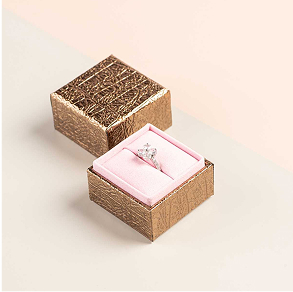
1. Hinged Lid Jewelry Boxes
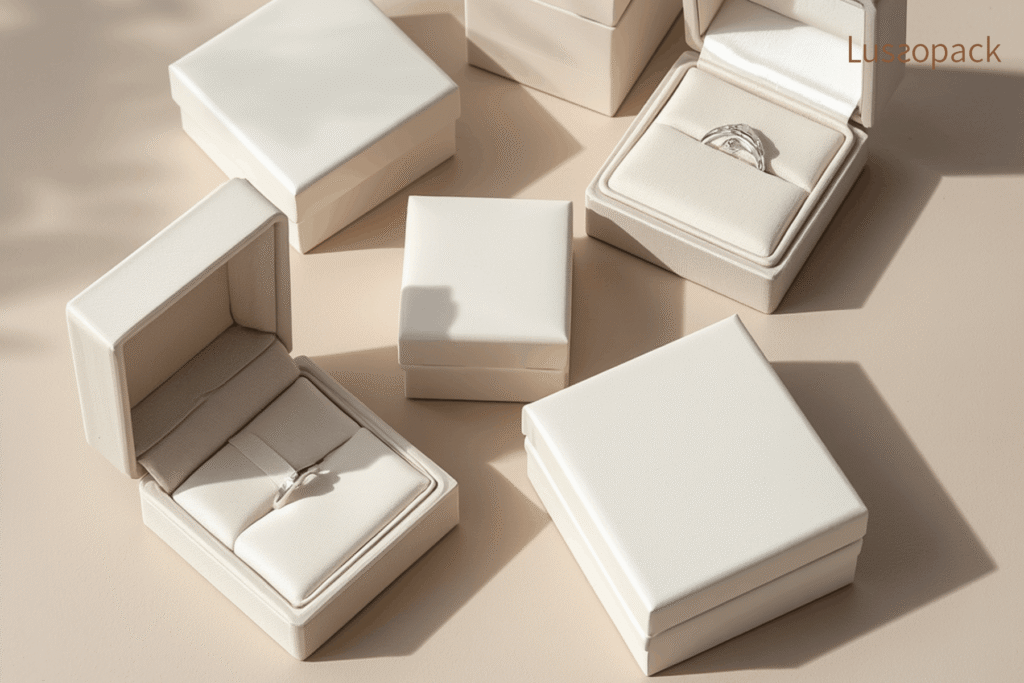
The hinged lid box is the format most people picture when they think of a jewelry box. The lid and base are connected by a fixed hinge at the back, and the box opens and closes as a single unit.
That permanence is part of the appeal. There are no separate components to misplace, no sleeve to slide off and set aside. The customer opens it, sees the piece, and closes it again. For everyday gifting and retail environments, that simplicity holds up well.
Hinged boxes are produced in hard-sided rigid construction, which gives them a solid, weighty feel that signals quality before the piece is even visible. The exterior can carry the full range of premium finishes: soft-touch lamination, foil-stamped logos, debossed brand marks, and textured paper wraps. The interior is typically fabric-lined with a fitted insert specific to the jewelry type.
This format works across nearly every jewelry category: ring boxes, earring boxes, bangle boxes, and pendant boxes are all standard. It is also one of the more recognisable formats for retail display, since the box can be opened and propped up for in-store presentation without any additional fixtures. For brands comparing the best materials for ring boxes and jewelry boxes, hinged boxes also offer one of the most flexible structures, working well with paper wraps, leatherette, velvet, suede, and fabric-lined interiors.
For brands building a core packaging range, the hinged lid box is often the starting point.
2. Magnetic Closure Book-Style Boxes
The book-style magnetic box opens like a hardcover book, with the spine on the left and the opening on the right, held shut by concealed magnets. It is a format borrowed from premium gift packaging and adapted well for jewelry at higher price points.
What separates it from a hinged box is the presentation scale. Book-style boxes have a wider, flatter profile that works particularly well for:
- Layered necklaces and longer chain pieces
- Earring and ring sets presented together
- Branded inserts, certificates, or care cards placed alongside the piece
The opening experience is also different. The magnetic pull resists slightly before releasing, slowing the reveal and creating a moment of anticipation. For brands selling at a price point where the unboxing is part of the product experience, that friction is a feature.
Exterior finishing options are the same as rigid formats: foil stamping, soft-touch lamination, embossing, and custom paper wraps. The interior can be split into compartments or laid out as a single display surface, depending on the product configuration.
Book-style magnetic boxes also photograph and film particularly well, which matters for brands where social content, influencer gifting, and omnichannel presentation are part of the marketing mix. This makes them a strong choice for jewelry packaging for brands selling in both retail stores and online, where the same box needs to feel premium in-store, look polished on camera, and protect the product during delivery.
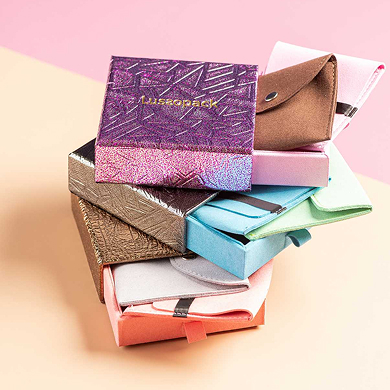
3. Drawer-Style Slider Boxes
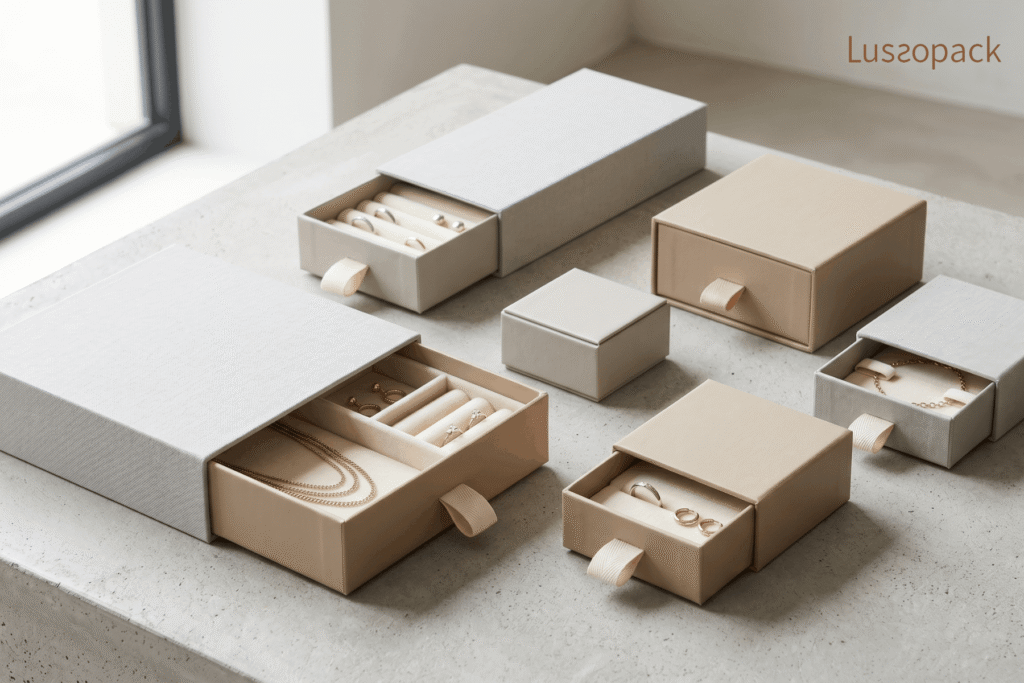
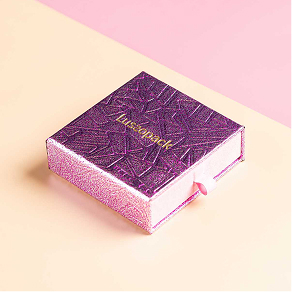
The drawer-style box, also called a slider box, works differently from every other format on this list. Instead of opening upward or outward, the inner tray slides horizontally out of a rigid outer sleeve when the customer pulls a ribbon or tab at the base.
The reveal is horizontal rather than vertical, which is visually distinct and creates a slower, more deliberate unboxing moment. The piece slides into view rather than being exposed all at once.
This format suits:
- Flat pieces such as bangles, cuffs, and chain bracelets
- Earring pairs are displayed side by side on a flat tray
- Brands that want a packaging format that photographs differently from standard hinged or lid-and-base boxes
The outer sleeve and inner tray are two separate components, which means they can be finished independently. A textured matte sleeve with a velvet-lined tray, for example, creates a contrast that adds interest when the box is opened. The sleeve carries the primary branding; the tray handles the interior presentation.
For retail environments, drawer boxes stack cleanly and take up less vertical shelf space than hinged formats of a comparable footprint.
4. Neck-and-Shoulder Box
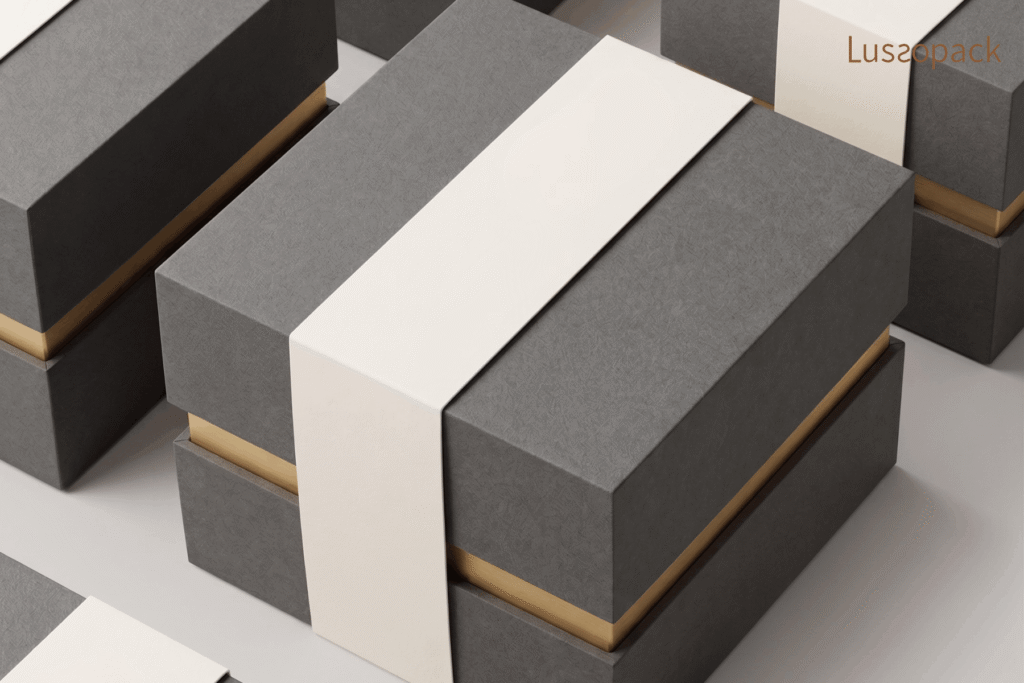
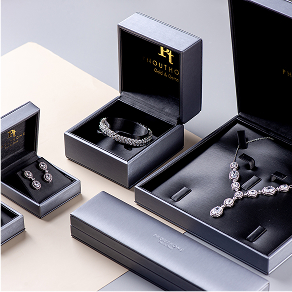
The neck box is a tall, narrow format built specifically for necklaces and pendants. The name comes from the internal neck, a fabric-covered form that the chain or cord drapes over, holding the pendant in a displayed, upright position rather than lying flat in a tray.
That distinction matters for presentation. Rather than a piece sitting in a lined interior, the pendant is shown as it would be worn, hanging from a visible form inside the box. For retail display with the lid removed, it reads immediately as a finished product rather than a stored one.
Neck boxes are typically produced as two-piece lid and base formats: the lid lifts away completely, and the base holds the neck form. Exterior finishing follows standard rigid box options, and the neck form itself is usually covered in the same fabric as the box interior to keep the presentation consistent.
This is a specialist format, not a general-purpose one. It works best for:
- Pendant necklaces and drop earrings, where the design reads better when displayed upright
- Retail environments where the box doubles as a display unit
- Brands with a strong visual identity that want the packaging to present the product rather than simply contain it
5. Clamshell Jewelry Boxes
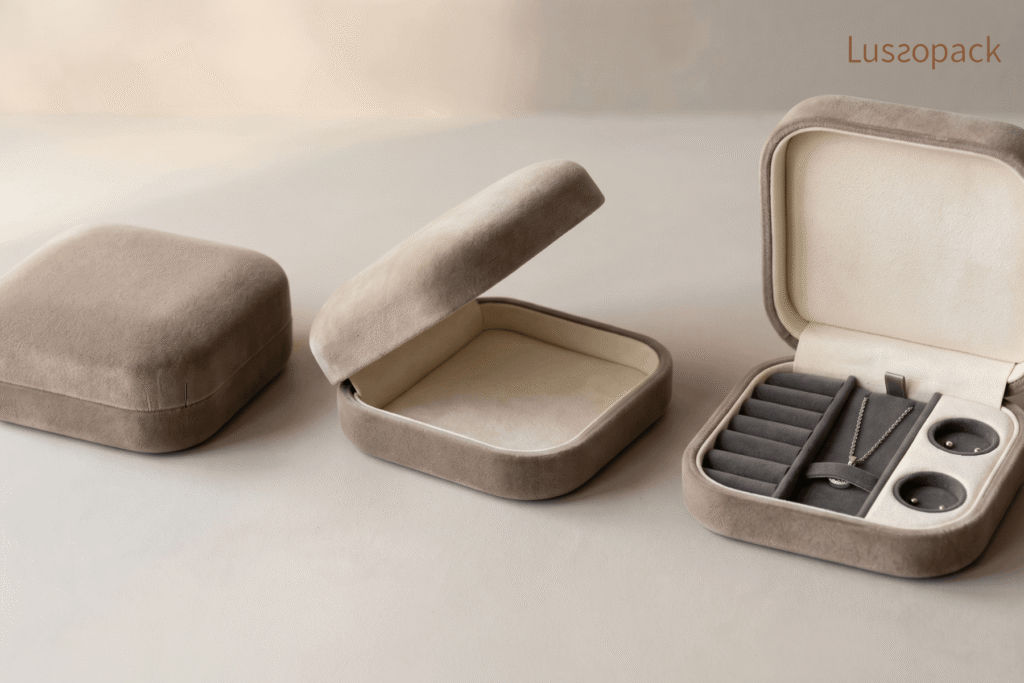
The clamshell box has a rounded spine and opens with a smooth arc, like a shell opening along its hinge. Unlike a standard hinged box with a flat back edge, the clamshell’s curved construction gives it a softer, more organic profile that reads differently on a shelf or in a customer’s hands.
The format is associated with understated luxury rather than structured formality. It works well for brands whose aesthetic leans toward the organic, the minimal, or the handcrafted.
Clamshell boxes are typically produced in rigid board with a fabric or paper exterior rather than a printed wrap, which gives the surface a more tactile, material-led quality. Common exterior treatments include:
- Linen and cotton fabric wraps in natural tones
- Suede or leatherette finishes for a more tactile exterior
- Blind embossing for a brand mark with no ink or foil
The interior is fabric-lined, usually in velvet or suede to complement the exterior material. Fitted inserts are specifiable for different types of jewelry.
For brands where the packaging needs to feel handmade or material-rich rather than graphically branded, the clamshell is a format worth considering.
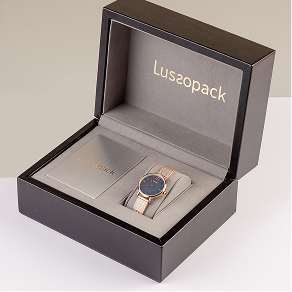
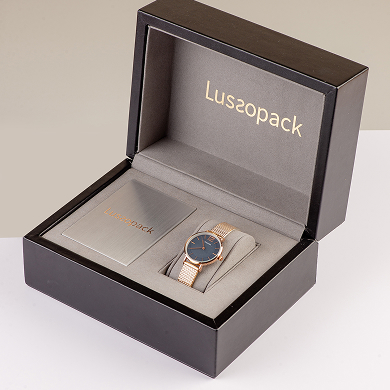
6. Luxury Watch & Jewelry Presentation Cases
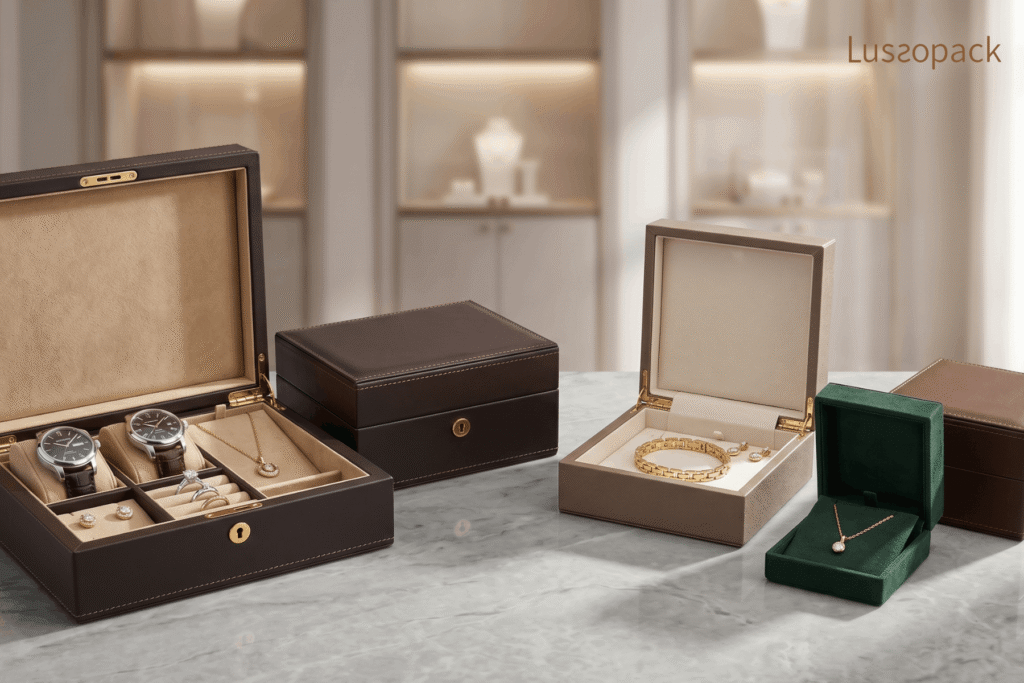
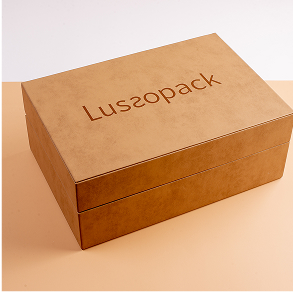
Presentation jewelry cases sit at the top of the jewelry packaging hierarchy in terms of construction weight, material quality, and permanence. These are not disposable boxes. They are built to be kept.
The format is larger than standard jewelry boxes, typically used for watches, statement pieces, or complete jewelry sets presented as a single gift. Construction is rigid throughout, with a weighted base, a fitted interior, and hardware such as metal hinges, clasps, and feet that are specified for durability rather than cost efficiency.
What distinguishes a presentation case from other rigid formats is the expectation of long-term use. The customer is not expected to discard it after unpacking. It becomes storage, a display piece, or a keepsake. That longevity turns the box into an extended brand touchpoint.
Interior configurations for presentation cases typically include:
- Custom-fitted foam or fabric forms are shaped to the specific piece
- Locking or secured closures for high-value contents
- Removable trays for sets with multiple components
Exterior materials often move beyond printed paper wraps into leatherette, genuine leather, lacquered wood, or fabric-covered board. These are materials chosen for how they age rather than how they look on a production line.
For brands at the higher end of the market, a presentation case signals that the product inside warrants this level of consideration. This is especially important when choosing luxury watch boxes for product launches, where the packaging needs to support both the first impression and the long-term value of the product.
7. Pillow Boxes for Jewelry
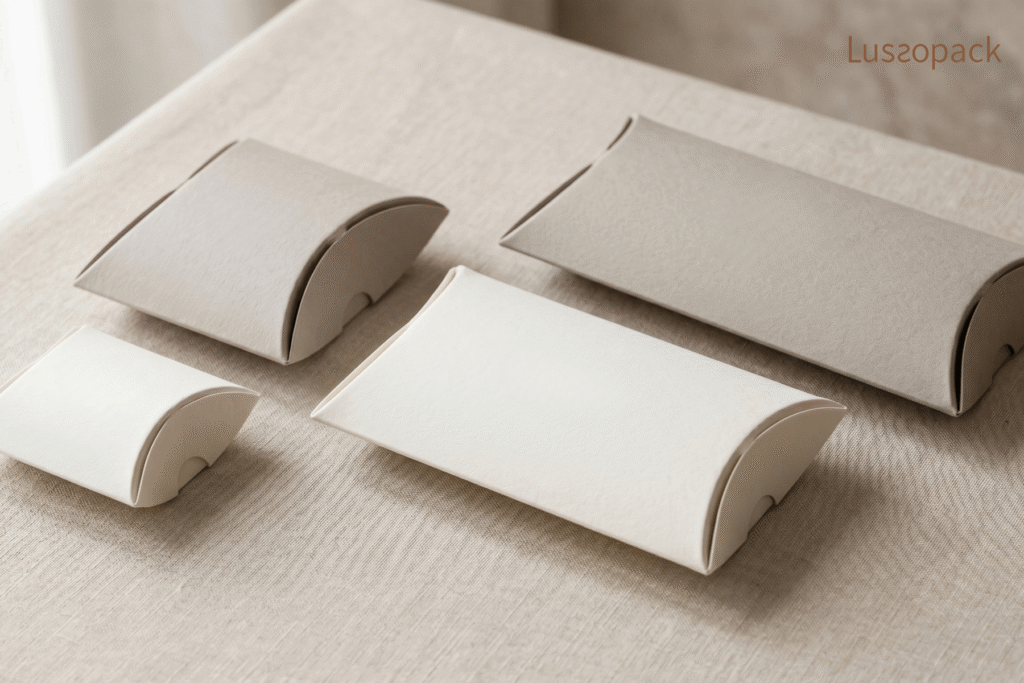
The pillow box takes its name from its shape. The ends of the box curve inward, giving it a rounded, cushion-like profile when assembled. It is a format that stands apart from every other box on this list purely based on its silhouette.
That visual distinctiveness is its primary brand-building asset. On a retail shelf or inside a shipping box, a pillow-shaped package reads differently from a rectangular one. It requires no explanation. The shape itself communicates that a decision was made about packaging rather than a default format selected.
Pillow boxes for jewelry are produced in rigid board rather than folding carton, which gives them the weight and structure needed to protect the piece inside. They work best for:
- Small, lightweight pieces such as stud earrings, rings, and simple pendants
- Gift-ready formats where the unusual shape replaces the need for wrapping
- Limited edition or seasonal releases where a distinctive format supports a campaign
Interior finishing typically involves a small pillow insert or fabric lining to hold the piece in place. Exterior options include soft-touch lamination, foil stamping, and embossing, all of which apply cleanly to the curved surface with the right production setup.
For brands that want packaging with immediate shelf presence and a format customers are unlikely to have seen before, the pillow box is an underused option worth serious consideration.
Choosing the Right Jewelry Box for Your Brand
Each format on this list solves a different problem.
- Hinged lid boxes are the reliable, versatile foundation for a core packaging range
- Book-style magnetic boxes slow the opening experience for high-value gifting
- Drawer-style slider boxes create a horizontal reveal that photographs and displays differently
- Neck boxes present pendants and necklaces upright, as they would be worn
- Clamshell boxes suit brands with an organic or material-led aesthetic
- Presentation cases are built to be kept, extending the brand into the customer’s home long after the purchase
- Pillow boxes offer immediate shelf presence through shape alone
The strongest jewelry packaging strategies rarely rely on a single format. Most brands benefit from a primary box for their core range and one or two specialist formats for gifting, retail display, or limited editions. Beyond structure, details such as material, finish, and color also shape how the packaging is perceived, which is why many brands also consider jewelry packaging colors and their symbolic meanings when building a cohesive packaging system.
If you are developing or refreshing your jewelry packaging, Lussopack’s team works with brands from initial concept through production, including prototype samples and large-scale wholesale fulfilment. Contact us to discuss your requirements or request a custom quote.